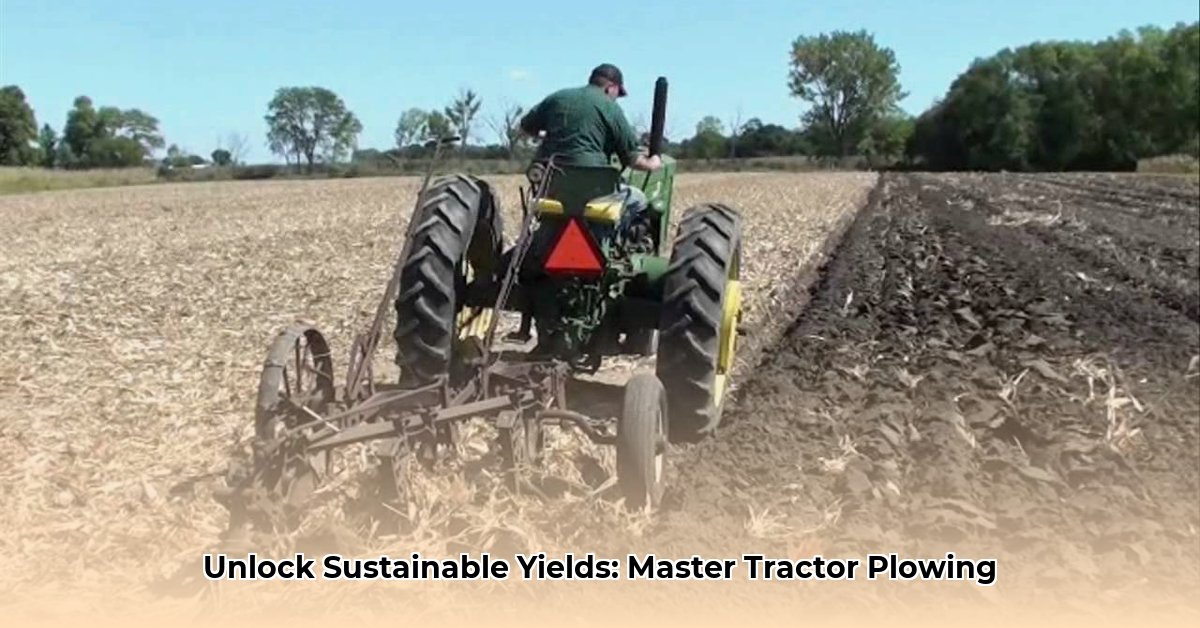
Tractor Plowing and Sustainable Agriculture: A Modern Perspective
Tractor plowing, a cornerstone of traditional agriculture, faces renewed scrutiny in the context of sustainable farming practices. While minimizing soil disturbance is often prioritized in sustainable agriculture, the reality is more nuanced. The optimal approach depends on a complex interplay of factors including soil type, weed pressure, and specific farming objectives. This guide provides actionable strategies for integrating tractor plowing into a sustainable agricultural system, maximizing yields while minimizing environmental impact. It's designed for a broad audience, including farmers of all experience levels, researchers, and policymakers. For more detailed tractor operation guidance, see this helpful guide.
Is complete no-till farming always the answer? Many farmers find that a combination of techniques, including carefully planned tillage, offers superior results. This guide explores how to achieve this balance for optimal soil health, resource efficiency, and environmental protection.
Tillage Strategies for Sustainable Farming
The choice between conventional plowing, reduced tillage, and no-till farming significantly affects soil health and overall sustainability. Understanding the strengths and weaknesses of each method is crucial for informed decision-making. "Conventional plowing offers benefits in certain situations, such as breaking up compacted soil or managing stubborn weeds, but it has potential negative effects, including enhanced erosion and decreased soil structure," explains Dr. Emily Carter, Soil Scientist at the University of California, Davis.
Conventional Plowing: When and How to Use It
Conventional plowing, characterized by deep and complete soil inversion, remains essential for managing specific soil conditions. However, its environmental impact must be carefully considered. When used judiciously, it can improve soil aeration and incorporate organic matter. But overuse can lead to increased soil erosion and the disruption of beneficial soil organisms.
Reduced Tillage Techniques: Finding the Middle Ground
Reduced tillage methods minimize soil disturbance while still addressing weed control and soil aeration. These methods often involve shallow plowing or other less intensive soil manipulation techniques. The reduction in fuel consumption and soil disruption compared to conventional plowing makes this technique a compelling option.
No-Till Farming: Minimal Soil Disturbance
No-till agriculture avoids plowing altogether, relying on other methods for weed control and soil management. It’s beneficial for soil health by preserving soil structure and protecting against erosion. However, it may not be suitable for all soil types or climates, and may present challenges in managing certain problematic weeds. Dr. David Miller, Agronomist at Cornell University, points out that "no-till works best with sufficient soil moisture and when effective weed management practices are in place."
Optimizing Tractor Plowing for Sustainability: A Step-by-Step Approach
Integrating tractor plowing into a sustainable farming system requires a multi-faceted approach. The following steps outline key considerations for maximizing efficiency and minimizing environmental impact:
- Invest in Precision Technology: Modern GPS-guided tractors offer improved fuel efficiency and minimize overlaps, resulting in decreased soil disturbance and reduced operating costs. Studies show that precision agriculture techniques can reduce fuel consumption by upwards of 20%.
- Implement Data-Driven Decision Making: Utilize soil sensors and yield monitors to gather data on soil conditions, moisture levels, and crop health. This empowers farmers to make informed decisions about plowing, optimizing timing and intensity tailored to specific field conditions.
- Employ Strategic Crop Rotation: Rotating crops through your fields significantly reduces weed pressure, decreasing the need for intensive plowing. The inclusion of cover crops further enhances soil health and reduces erosion.
- Optimize Plowing Techniques: Adjust plowing depth and timing based on soil conditions and crop requirements. Consider using specialized plow types designed to minimize soil disturbance.
- Monitor and Evaluate: Regularly assess the effectiveness of your plowing techniques by monitoring soil health indicators, crop yields, and erosion levels. Refine your approach based on collected data.
Advanced Techniques: Contour and Strip Farming
To further reduce soil erosion, consider employing specialized plowing techniques:
- Contour Plowing: Plowing along the contours of the land minimizes water runoff and erosion, effectively creating natural terraces that retain water and prevent topsoil loss.
- Strip Farming: Alternating bands of different crops, including cover crops, provides additional protection against wind and water erosion, enhancing soil health and biodiversity.
The Future of Tractor Plowing in Sustainable Agriculture
Technological advancements and a growing understanding of soil ecology are shaping the future of tractor plowing within sustainable agriculture. Continued research into precision agriculture techniques, coupled with innovative tillage methods, promise even more efficient and environmentally friendly farming practices that preserve soil health and enhance productivity.
Key Takeaways:
- Sustainable agriculture requires a nuanced approach to tillage, balancing the benefits of soil preparation with the need to minimize environmental disruption.
- Precision technology, data analysis, and strategic crop management are key elements in optimizing tractor plowing for sustainability.
- Continuous research into innovative tools and methods is vital for advancing the role of tractor plowing in sustainable farming systems.